
Everyone says “go work a ski season abroad” — like it doesn’t matter where. It does. Pick the wrong country and you’ll barely cover rent. Pick the right one and you’ll come home with €12,000+ in the bank.
What Kind of Job Should You Look For?
1. “Behind the Scenes” Jobs (perfect if you speak little to no local language)
If your German, French or Scandinavian is non-existent, but you have a communicative level of English, these are your best bets:
- Kitchen Porter / Dishwasher (Spüler / Plongeur): Washing dishes and helping chefs with basic food prep. Physically demanding, but zero stress about speaking the language.
- Room Attendant / Housekeeping (Zimmermädchen / Femme de chambre): Cleaning rooms and making beds. You’ll work in teams or alone, usually with music or a podcast in your ears all day.
- Night Cleaner / Janitor: Cleaning the spa, lobby, or restaurant areas after the guests go to sleep.
2. “Front of House” & Guest-Facing Jobs (if you speak English + the local language)
If you can chat confidently and have a friendly personality, you can target these higher-paying, higher-tip positions:
- Chalet Host (mostly in France): You manage a mountain chalet for a group of guests — cooking breakfast, tidying up and making them feel at home.
- Waiter / Bartender / Runner: Serving food and drinks. Runners only carry plates (less language needed), while full waiters take orders and pocket the best tips.
- Front Desk / Receptionist: Checking guests in and out. This needs the highest level of local language skill and organization.
- Resort Activity Guide / Santa’s Elf (Lapland): Entertaining kids, guiding snowmobile tours or managing ski rental equipment.
Where to Work in Europe
1. Switzerland 🇨🇭 — Highest pay, hardest to get in
With a gross hourly rate starting from €20, your net salary lands around €2,700/month on a 5-day workweek, or above €3,000/month on a 6-day one — the highest base pay on this list. But that’s before two more deductions come out: health insurance and accommodation/food. Once those are gone, you’re realistically looking at around €2,000/month actually landing in your pocket on a 5-day schedule, or about €2,500/month on a 6-day one.
Where does the rest go?
- Employers usually deduct the cost of board and housing from your salary — sometimes up to €1,000, if it isn’t provided for free.
- Health insurance (Krankenkasse) is not your employer’s responsibility and it isn’t deducted automatically, you have to arrange it yourself, privately. Foreign seasonal workers are legally required to take out basic Swiss insurance (KVG/LAMal). It’s a fixed fee (not a percentage of your salary) that varies by canton, but for seasonal workers it’s usually around CHF 300–400/month (roughly €310–420) — unless your contract specifically has the hotel cover it as a perk, which is rare but does happen.
- On a 6-day workweek, overtime usually isn’t paid out monthly — you only get it at the end of the season.
- There’s a 13th-month salary on top.
Competition for these jobs is fierce, and you’ll need multiple languages, solid experience and a strong work ethic. If that sounds like you, the reward is high tips and stunning scenery.
2. Austria 🇦🇹 — Best for maximum savings
If your priority is saving as much as possible in the shortest time, with no experience required, Austria is your answer. The minimum salary in the hotel industry is €2,000 net/month (on a 6-day workweek). Thanks to government regulations, every employee also receives a 13th and 14th monthly salary, plus a share of tips. That means at the end of a 4-month season, you’ll get an extra ~€1,400 on top — plus tips.
The trade-off? Austria isn’t known for its party scene. If that matters to you, look elsewhere.
Keep in mind: most positions run 6 days a week, so the monthly figures above are based on that schedule.
3. France 🇫🇷 — Best for social life
Looking to mix work with an unforgettable experience? France’s massive ski resorts like Méribel and Morzine are legendary for their social atmosphere. As of June 2026, the gross minimum wage is €12.31/hour, which works out to roughly €1,867/month gross on a standard 5-day schedule — lower than Austria or Switzerland, but employees often get access to the slopes and wellness facilities during their time off. There’s also a legal cap on how much can be deducted from your pay for housing and food, which helps.
There’s also a 10% seasonal premium (Prime de précarité) worth knowing about. Got a standard fixed-term contract (CDD)? You’re entitled to it at the end. Got a seasonal contract specifically (CDD saisonnier)? Then it’s not legally required — but plenty of hotels pay it anyway, just to get you to come back next season.
Fancy becoming a chalet host and learning to ski on your breaks? This is your place.
4. Germany 🇩🇪 — Solid alternative
Fewer resort options, but still worth considering. Since January 2026, the minimum hourly rate is €13.90 gross. On a 5-day workweek, that’s roughly €1,600–1,700 net/month; on a 6-day workweek, it comes out to about €2,891 gross/month, which — depending on your individual tax situation (single, no kids, foreign) — usually nets out to around €1,850–2,000/month. Housing and food are provided in a lot of places, but not always for free; some employers deduct for it.
One quirk that can actually work in your favor: the 70-day rule (Kurzfristige Beschäftigung). Run a season shorter than that, and there’s no social security deduction at all — meaning a noticeably fatter paycheck.
5. Norway, Sweden & Finland 🇳🇴🇸🇪🇫🇮 — The Ultimate Adventure
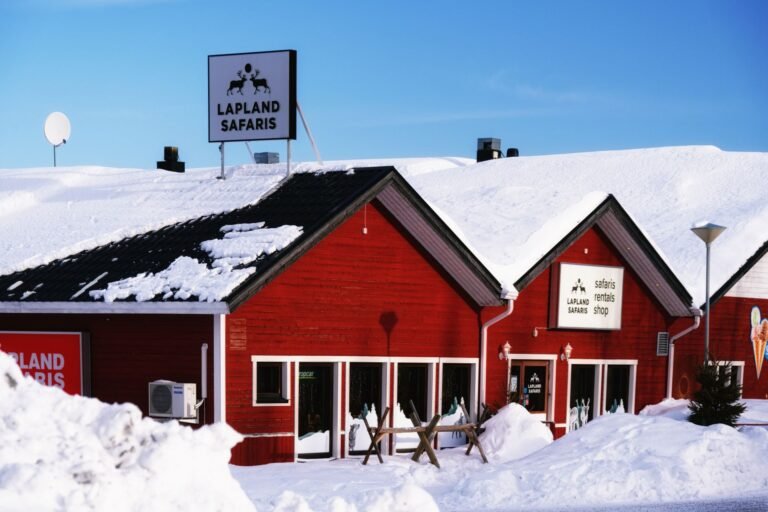
Do you thrive in −20°C and dream of seeing the Northern Lights? Lapland offers some truly unique positions: hotel staff, snowmobile guide, or even Santa’s elf (yes, really). These countries hire huge numbers of seasonal workers for the winter season, and for about 90% of the jobs, communicative English is more than enough — you don’t need the local language.
Gross pay up here isn’t wildly different from the rest of Europe — Finland, for example, starts at around €11.70/hour gross, which works out to roughly €1,600/month (gross) on a 5-day schedule. The real catch is what happens after: taxes and the cost of living bite a lot harder this far north, so what actually lands in your pocket at month’s end depends heavily on the employer — anywhere from €1,000 to €1,900. Finnish tax rules in particular are anything but simple, so it’s worth talking this through with your employer before you sign.
On top of that, housing and food often aren’t included, and in deep winter you only get 1–2 hours of daylight a day. Winter resorts here also tend to be in the middle of nowhere, so you’re often entirely dependent on the hotel for food and a place to sleep — and that place to sleep is usually a shared room (2 to 6 beds), which some employers deduct a fairly large amount for. Not the best choice if saving money is your main goal, but possibly the greatest adventure on this list.
Quick Comparison
| Country | Best For | Typical Monthly Pay | Local Language Needed? |
|---|---|---|---|
| 🇨🇭 Switzerland | Highest pay | ~€2,000–2,500 in pocket | Yes, multiple |
| 🇦🇹 Austria | Maximum savings | ~€2,000 net + bonuses | Helpful, not always essential |
| 🇫🇷 France | Social life | ~€1,867+ gross | English (french is a plus) |
| 🇩🇪 Germany | Solid all-rounder | ~€1,600–2,000 net | Basic german (or english) |
| 🇳🇴🇸🇪🇫🇮 Norway/Sweden/Finland | Adventure | ~€1,000–1,900 in pocket | English usually enough |
Figures are gross/net as noted above and assume entry-level positions — see each country’s section for the full picture.
Before You Go: A Few Practical Tips
- You can probably get tax back. In almost every country on this list, you can claim back tax even if you only worked a 3-month season. The amount is calculated proportionally under local rules, and it can be a surprisingly large sum — for just the cost of filing one form.
- Get your paperwork on your last day, not after. Request your tax documents (Lohnsteuerbescheinigung in Germany, Lohnausweis in Switzerland) from HR on your very last day of work. Without them, you won’t be able to claim anything back once you’re home.
- Tips work differently everywhere. In Austria and Switzerland, tips are often pooled in a “Tronc” system and shared out — even kitchen staff and dishwashers get a cut. In France and Scandinavia, where almost everyone pays by card, tips are much lower and pretty much negligible.
So, Which One’s Right for You?
If your main goal is the fattest bank account at the end of the season, Austria‘s your answer. If you want bragging rights and unforgettable nights out, go to France. If you’ve got the languages and the stamina to back it up, Switzerland pays the most, period. And if you want a season you’ll still be telling stories about in ten years — headlamps, snowmobiles, polar darkness, the works — Norway, Sweden, and Finland are unbeatable, even if the bank account ends up thinner.
None of these are wrong choices. The real question isn’t “which country pays best” — it’s what you actually want out of the season: money, fun, language practice, or a story worth telling. Pick based on that and the rest just falls into place.
Whichever one you choose: do a season once, and “I can’t afford” stops being true for you. Period.
Have you done a season in one of these countries? Drop your experience in the comments — the good, the bad and the ugly.
The information, wages and tax rules in this article are for general guidance only, based on current 2026 regulations. Collective agreements, tax brackets and individual conditions vary by employer, so this isn’t official legal or financial advice. Always check the latest rules with local labor authorities (e.g. L-GAV in Switzerland, Arbeiterkammer in Austria) before signing a contract.